
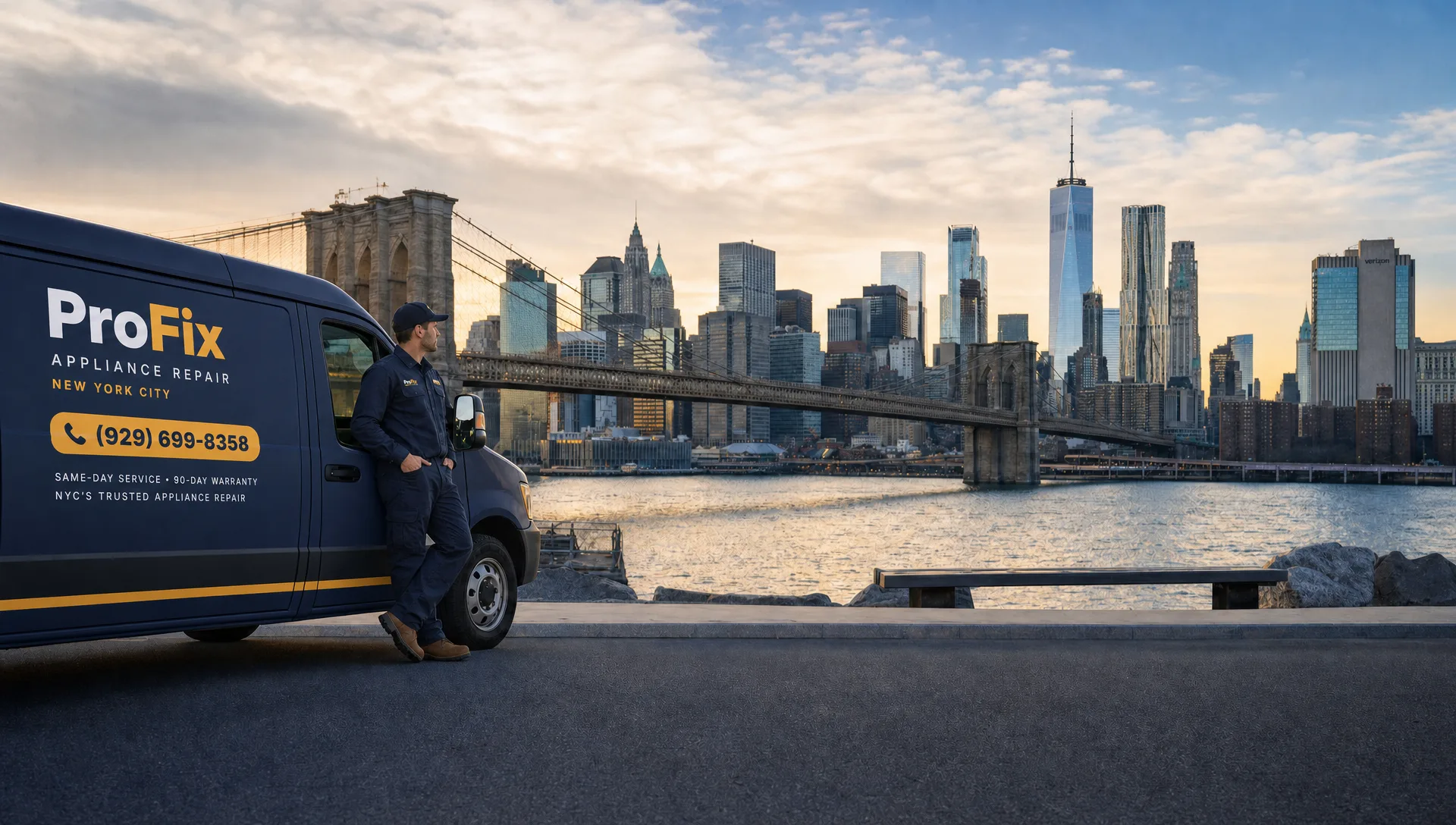

Expert Repair
Sharp Microwave Repair in Lower Manhattan, NY
Local Sharp technicians in Lower Manhattan, NY — we diagnose and fix your Microwave fast, usually same day.
Mon–Sat 7am–8pm · Sun 9am–5pm
Schedule Your Repair
Service Type
What type of service do you need?
Or call us directly:
(929) 699-8358Brands We Service


Built for New York — Apartments, Co-ops & More
ProFix NYC provides local Sharp Microwave repair in Lower Manhattan, NY. Our neighborhood technicians are factory-trained to service Sharp appliances and carry genuine OEM parts to complete most repairs in a single visit. Whether your microwave needs attention or has another issue, we're already in your Lower Manhattan neighborhood. We cover zip codes 10004, 10005, 10006, 10007, 10038 and all surrounding areas.
How It Works
Available Now · Brooklyn, Queens, Staten Island, and Manhattan
Ready to schedule your repair?
ProFix NYC — trusted by thousands of NYC homeowners. Same-day slots available.
About Sharp Microwave Repair
Diagnosis on a Sharp microwave starts where this category fails most often: magnetron output, the door switch and interlock chain, turntable motor operation, and the control board, since those explain nearly every no-heat, arcing, or dead-panel symptom. Sharp pioneered the microwave drawer — an oven set down into lower cabinetry instead of sitting on the counter or above the range — and rounds that out with a modest line of refrigerators and ranges. Our technicians read those symptoms against the way the brand builds its equipment.
What Local Buildings Mean for Appliances in Lower Manhattan
A large share of Lower Manhattan housing sits in high-rise buildings with doormen, front desks and formal rules for contractors. Managing agents often require a certificate of insurance on file before any outside technician starts, and service elevators may need to be booked for a set time slot. Some buildings limit noisy or extended work to weekday hours, so it helps to check the building's alteration and work rules before choosing a date.
Office-to-residential conversions in the Financial District bring their own quirks. Kitchens and laundry closets were fitted into floor plates originally designed for desks, so plumbing and venting routes can be long or unconventional. Dryer exhaust that travels a lengthy path to the outside wall is a typical design compromise in such buildings, and it is worth keeping in mind whenever drying times start creeping up.
Battery Park City, along the Hudson on the western edge, is a planned residential community of mid-rise and high-rise apartment buildings. Many units have stacked washer-dryers in closets and integrated kitchen appliances. The neighborhood's tidy layout and waterfront esplanade give it a calmer feel than the streets to the east, but the buildings still operate with the same doorman and elevator protocols found throughout the district.
TriBeCa's southern blocks near the Civic Center and parts of the Seaport district hold older masonry buildings converted to lofts, with open kitchens and oversized appliances. Freight elevators are common in these former commercial structures. Low-lying waterfront parts of Lower Manhattan flooded during Hurricane Sandy in 2012, and basement mechanical spaces in some buildings were rebuilt afterward, which is useful background when planning laundry room work.
Common Sharp Microwave Issues We Fix
Lower Manhattan Zip Codes We Cover for Sharp Microwave Repair
Other Microwave Brands in Lower Manhattan


